
by Laura K Secor
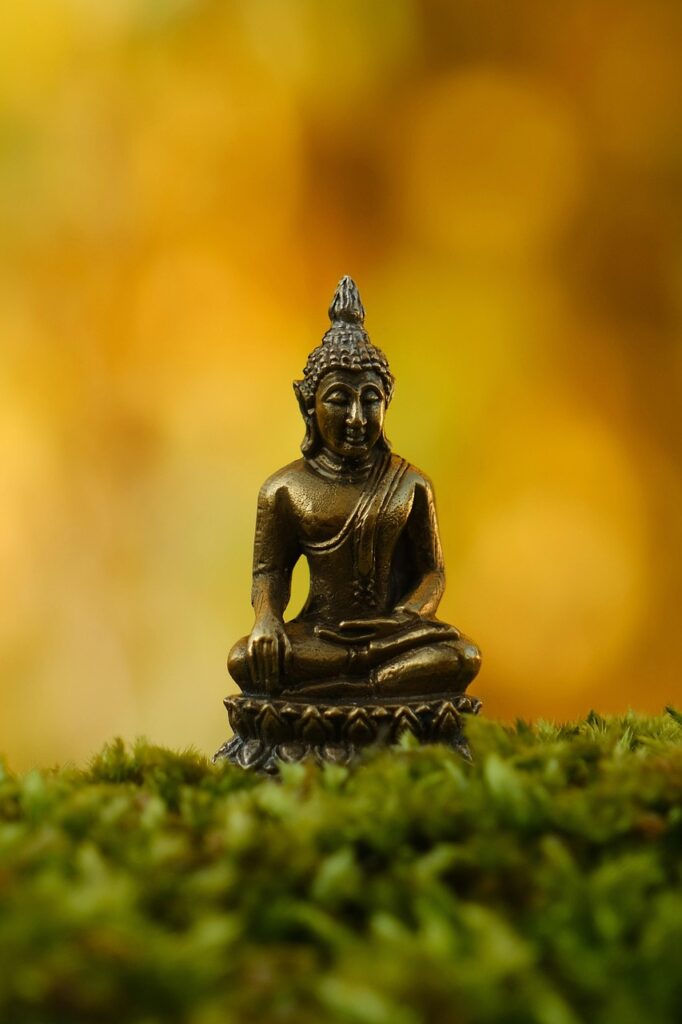
In many of her dharma talks available through the publisher Sounds True, Pema Chodron teaches us the way of the Bodhisattva by exploring a text of the same name. The Bodhicharyavatara, the Way of the Bodhisattva, was written in the 800s by a Buddhist monk named Shantideva. Pema writes in her book “No Time to Lose”:
“This classic text, written by the Indian sage Shantideva, gives surprisingly up to date instructions for people like you and me to live sanely and openheartedly, even in a very troubled world. It is the essential guidebook for fledgling bodhisattvas, these spiritual warriors who long to alleviate suffering, their own and that of others.”
There are several schools of Buddhism, and the one I have spent the most time with is called the Mahayana school, which emphasizes compassion. Buddhists of other schools have their own spiritual goals, but Mahayana Buddhists hold as their purpose the alleviation of suffering. They (we) seek spiritual enlightenment in the hopes that their own growth will help others to grow as well. Mahayana Buddhists do not hope to escape the ordinary world and ascend to nirvana – they commit to staying in the ordinary world to help others. Which others? Why, all sentient beings, of course. Let’s not think small, here.
When I first read some verses from the Way of the Bodhisattva, I did not see how they could have any relevance to me. I needed Pema’s teaching to explain the spirit that underlay the words. Pema herself struggled at first.
“Once I actually started grappling with its content, the text shook me out of a deep-seated complacency, and I came to appreciate the urgency and relevance of these teachings. With Shantideva’s guidance, I realized that ordinary people like us can make a difference in a world desperately in need of help.”
The Way of the Bodhisattva is divided into three main sections. We will open up the first section and begin to look inside today. The Buddhist monk Nagarjuna wrote a poem breaking the text into three main sections, “May bodhichitta, precious and sublime / Arise where it has not yet come to be / And where it has arisen may it not decline / But grow and flourish ever more and more.” This first section is the one in which bodhichitta arises “where it has not yet come to be.”
Pema writes, “The Sanskrit term bodhichitta is often translated as “awakened heart” and refers to an intense desire to alleviate suffering. Specifically, it is the heartfelt yearning to free oneself from the pain of ignorance and habitual patterns in order to help others to do the same…. We start close to home with the wish to help those we know and love, but the underlying inspiration is global and all encompassing. Bodhichitta is a sort of “mission impossible”: the desire to end the suffering of all beings, including those we’ll never meet, as well as those we loathe.
“Sadly, we’re usually so preoccupied with our own comfort and security that we don’t give much thought to what others might be going through. While justifying our own prejudice and anger, we fear and denounce these qualities in others. We don’t want ourselves or those we care about to suffer, yet we condone revenge on our foes. Seeing the disastrous results of this “me-first” thinking in the daily news, however, we might long for bodhichitta to arise in the hearts of men and women everywhere. Then, instead of seeking revenge, we’d want even our enemies to be at peace.
“Martin Luther King Jr. exemplified this kind of longing. He knew that happiness depended on healing the whole situation. Taking sides – black or white, abusers or abused – on perpetuates the suffering. For me to be healed, everyone has to be healed.”
As so many people do, I admire King’s generosity of heart. He truly lived the bodhisattva ideal. Sometimes I engage in a Buddhist meditation called the “loving-kindness” meditation where one imagines joy, ease, and good fortune, first for one’s favorite people, then for people one knows only slightly, then for strangers, and finally for people one abhors. I have not yet had enormous success with this meditation, but Pema – and Martin Luther King – inspire me to keep trying, as they inspire other fledgling bodhisattvas. We may not achieve success before we die, but we can be in the process of opening our hearts when we go.